The city gave owners of smaller soft-story apartment buildings until April 2026 to finish their seismic retrofits. That date has come and gone. If you own one of these buildings, or you are underwriting an offer on one right now, the compliance clock is no longer the number that should worry you most.
The number that matters is the one your insurance broker quotes you next.
Here is the mechanism most sellers do not see coming. A missed retrofit deadline does not just expose you to city fines. It creates a documented, discoverable fact that insurance carriers can now point to when they decline to renew a policy or triple a premium on a pre-1978 wood-frame building. And without insurance, a lender will not fund or keep a mortgage on the property. The city's compliance program set the clock. The insurance market is what actually enforces it.
The Deadline That Already Passed
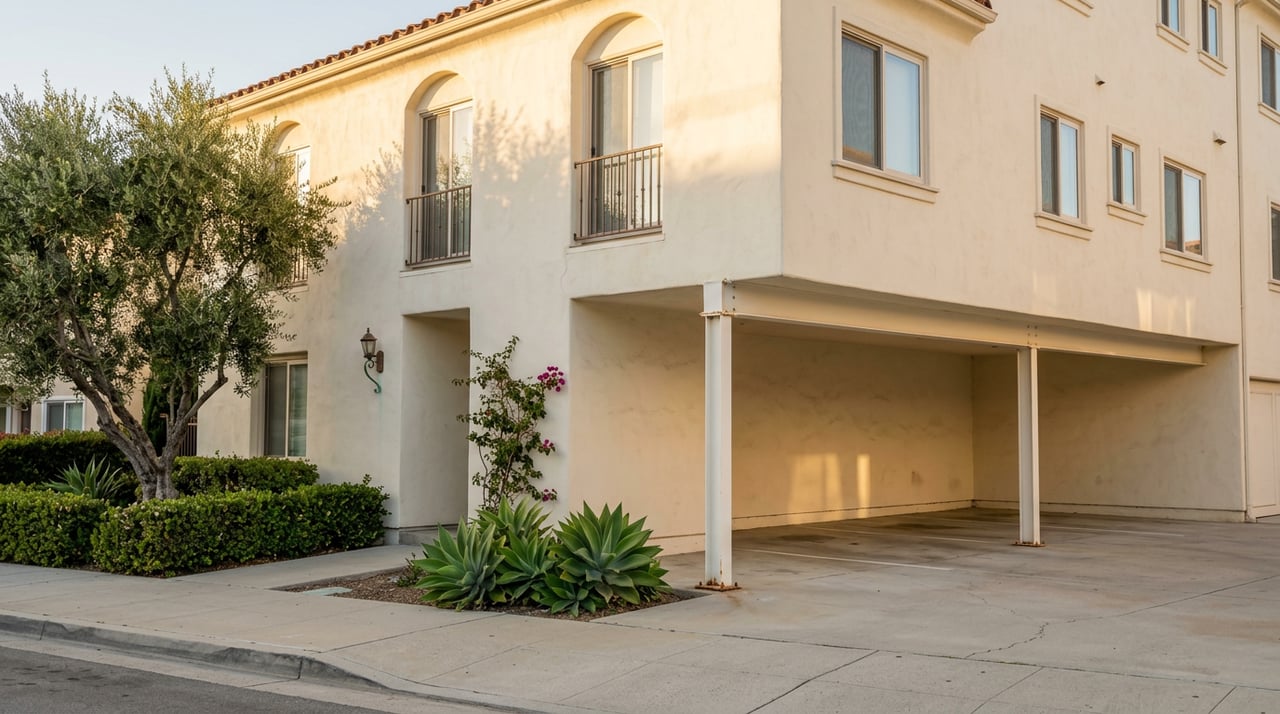
Los Angeles Ordinance 183893 identified roughly 13,500 wood-frame buildings across the city with a specific vulnerability: two or more stories, built before January 1, 1978, with ground-floor parking or another open configuration that leaves the first story weaker than the floors above it. In an earthquake, that weak ground floor is where the building fails first.
The city split compliance into two tiers. Priority 1 buildings, generally those with 16 or more units or three or more stories with ground-floor commercial space, had to complete construction by April 2024. Priority 2 covers everything else in scope, mostly two and three-story residential buildings with tuck-under parking and under 16 units. Their construction deadline was April 2026.
That deadline is now behind us. If your building received an Order to Comply years ago, the sub-deadlines built into that order (two years to submit a structural plan, three and a half years to pull a permit, seven years to finish construction and close it out) may have already lapsed at different points along the way. Each missed milestone adds to the paper trail a buyer's lender and insurer will eventually see.
What Missing It Actually Triggers
Non-compliance with the ordinance is a misdemeanor under the Los Angeles Municipal Code, and the Department of Building and Safety can levy escalating fines the longer a building stays out of compliance. That part is well documented and it is the part most retrofit guides lead with.
It is also not the part that decides whether your building sells this year.
The buildings hardest hit by the insurance crisis are also the buildings most likely to be on the market in 2026.
That line, from a broker who tracks LA multifamily insurance renewals, captures the actual sequence. Carriers have been repricing risk on older wood-frame stock across California since 2022, and pre-1978 buildings with an unresolved soft-story condition sit at the top of that repricing list. Multiple carriers have pulled back from writing this risk class at all. Where they still write it, premiums on non-compliant buildings are running two to five times what a comparable retrofitted building pays. Some owners are being asked to prove retrofit progress before a policy will even be quoted.
A mortgage lender cannot carry a loan on an uninsured commercial property. If a policy lapses and the owner cannot find replacement coverage, the lender's options are to force-place its own expensive coverage or call the loan outright. That is the actual leverage point. The ordinance created the paper trail. The insurance market turned that paper trail into a financing filter.
Priority Tiers at a Glance
| Priority Tier | Building Profile | Construction Deadline | Status as of September 2026 |
|---|---|---|---|
| Priority 1 | 16+ units, or 3+ stories with ground-floor commercial | April 2024 | Deadline passed; most either compliant or deep into enforcement |
| Priority 2 | All other soft-story buildings, typically under 16 units with tuck-under parking | April 2026 | Deadline passed; LADBS enforcement active |
If your building falls into either row and you have not confirmed its current status, the Department of Building and Safety's Soft-Story Retrofit Program maintains the inventory list and can tell you exactly where your Order to Comply stands.
What This Does to Your Buyer Pool, and Your Price
Because the insurance and financing problem is real and not theoretical, non-compliant soft-story buildings in Los Angeles have been trading at meaningful discounts to compliant comparable sales, generally in the range of 10 to 30 percent depending on how far past deadline the building is and how confident the buyer pool is about retrofit costs.
One pricing example that circulated among local multifamily brokers this year involved a 12-unit soft-story building in Van Nuys. At full compliant value, comparable sales put the building near $3.6 million, or $300,000 a unit. With an estimated $180,000 retrofit cost and a risk premium layered on for execution uncertainty, the listing strategy landed closer to $3.35 million, with the retrofit status and cost estimate disclosed openly in the offering package.
Notice what that discount is actually paying for. It is not just the $180,000 in construction cost. It is compensation for the fact that a large share of the conventional buyer pool, the ones who need a standard commercial mortgage, cannot close on the building until its insurance and compliance picture is resolved. That leaves cash buyers, 1031 exchangers, and value-add investors with construction experience as the realistic pool, and a smaller pool means a lower clearing price regardless of what the engineering report says.
If you are selling, that is the number to plan around: not the retrofit estimate alone, but the retrofit estimate plus what it costs you to sell into a shrunken buyer pool.
What Belongs in the Disclosure Package
The single biggest driver of a soft-story deal falling apart in escrow is not the soft-story condition itself. It is a buyer discovering the condition after they have already built a number in their head.
Two examples from recent LA multifamily transactions make the contrast clear. On one Echo Park Avenue deal that closed at $6.25 million, the offering memorandum disclosed three specific items upfront: a unit with a pending unlawful detainer, a twelve-year-old roof approaching replacement, and a soft-story retrofit that had technically been completed but needed its certificate of compliance reissued by the city. The buyer priced all three into their offer, and the deal closed within the original range because nothing surfaced later that had not already been on the table.
A separate South LA transaction that closed at $2.65 million followed the same logic. Full structural disclosure in the offering package eliminated any post-inspection renegotiation. The buyer knew exactly what they were buying before they made an offer, and the price they offered reflected that.
If you are preparing to list a soft-story building anywhere in the San Fernando Valley, Hollywood, Koreatown, Echo Park, Pico Union, or South LA, where this building type is common, the package a serious buyer will expect includes:
- Current retrofit status pulled directly from LADBS, including any Order to Comply and where the building sits against its sub-deadlines
- A structural engineer's cost estimate if the retrofit is not complete
- Current insurance policy terms and any non-renewal or premium increase notices from the past two renewal cycles
- Two to three years of actual operating expense history, since insurance line items have moved enough recently that a buyer will not trust a stale number
- Rent roll with current rent-control registration where applicable
Buyers price known problems. What they cannot price with any confidence, they discount for, and that discount is almost always larger than the actual repair bill.
The Rent Recovery Math, and Where It Gets Fuzzy
Owners who decide to retrofit rather than sell do have a partial cost recovery path through the Rent Stabilization Ordinance. Landlords can apply through the Housing Department for a capital improvement rent increase, generally capped at half the total retrofit cost, amortized over the useful life of the improvement. Exactly how that translates to a monthly number per unit varies depending on the specific improvement and the building's rent roll, so treat any per-unit dollar figure you see quoted online as a starting estimate rather than a fixed cap, and confirm the current formula with the Housing Department before you build it into a pro forma.
For owners who do not want to retrofit and do not want to sell at a discount, California's Ellis Act gives landlords a third option: withdrawing all units from the rental market permanently. It is a real path, but it comes with its own relocation obligations and a multi-year restriction on returning the units to the rental market, so it is worth treating as a last resort rather than a default.
A Few Questions Worth Asking Before You List
Does the retrofit obligation transfer to a buyer if I sell as-is? Yes. The Order to Comply attaches to the property, not the owner, so an unresolved compliance status becomes the new owner's problem the moment escrow closes, which is exactly why buyers price it into their offer.
Can I still get a loan on a non-compliant building? It depends entirely on whether you can secure insurance first. Some carriers will still write a policy on a non-compliant building at a much higher premium, and a lender can work with that. Others are declining the risk class outright, which forecloses conventional financing until the building either completes the retrofit or finds a carrier willing to underwrite it.
Is a completed retrofit enough, or do I need the paperwork too? Both. The Echo Park example above shows a building where the physical retrofit was done but the certificate of compliance had not been reissued, and buyers still priced that gap into their offer. A retrofit that is not documented as closed out with the city functions, for pricing purposes, almost the same as one that has not been finished.
If you own a soft-story building in Los Angeles and you are trying to decide whether to retrofit, sell as-is, or explore an exit under the Ellis Act, the right first step is an honest read on where your building actually stands with LADBS and what your current insurance market looks like, before you set a number. Tholfaqar Al Emara works with multifamily owners across Los Angeles who are weighing exactly this decision, and can walk through what your specific building's compliance status and insurance picture mean for pricing before you go to market. Let's Connect.